
Your BRSR Report Is Live. But Can Your Plants Actually Back It Up?
Updated: Apr 28

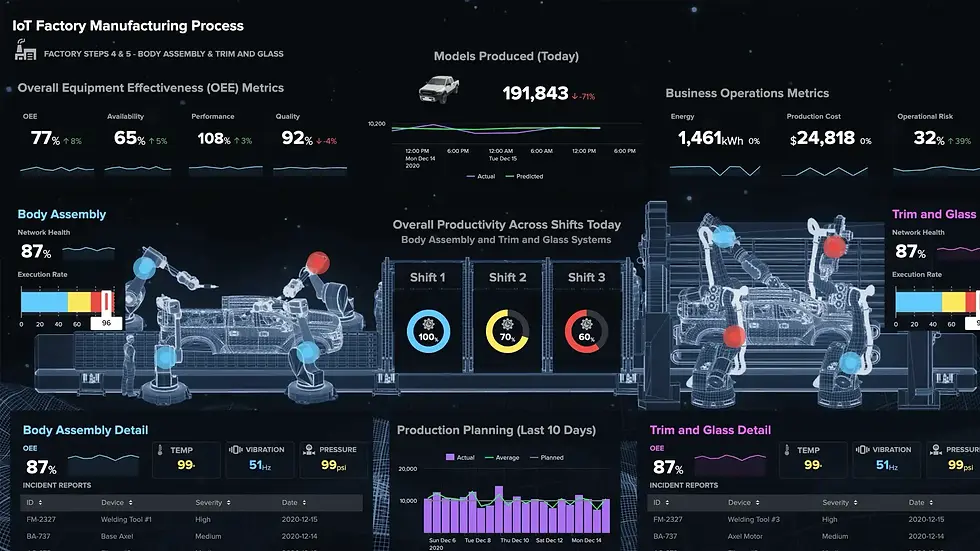
Operational measurement infrastructure at facility level — the foundation of credible BRSR disclosure.
Filing a BRSR report and having the underlying data to support it are two very different things. The distance between them is closing faster than most sustainability teams and CFOs realise.
The Compliance Task vs. the Data Task
What the Facility Level Actually Looks Like
One Regulatory Escalation Away
Where the Real Work Begins
There is a particular kind of confidence that comes from filing. Once the BRSR report is submitted, the disclosure is done, the boxes are checked, and the compliance calendar moves on to the next obligation. For most listed companies in India, this is where the ESG conversation ends for the year.
It should not be.
Because filing a BRSR report and having the underlying data to support it are two different things. And the distance between them — which has been manageable until now — is closing faster than most sustainability teams and CFOs realise.
The Compliance Task and the Data Task Are Not the Same Task

When SEBI introduced BRSR, the initial pressure was disclosure: can companies report on the required parameters? The industry responded with varying degrees of rigour. Consultants were engaged, templates were populated, reports were filed. For many companies, especially those filing for the first time, the process involved a combination of available data, engineering estimates, industry benchmarks, and reasonable assumptions. This is not unusual. It is how most ESG disclosure frameworks get adopted in their early years.
The problem is the assumption that this approach will remain acceptable.
SEBI has been systematically raising the bar. BRSR Core introduced mandatory reasonable assurance for the top 150 listed entities. That number will expand. The requirements now extend to supply chain disclosures — asking companies to report on their principal value chain partners. The parameters being scrutinised are not just the numbers themselves but the systems and processes that generate them.
"An auditor conducting reasonable assurance does not simply review a report. They examine the data sources, the collection methodology, the internal controls, and whether the reported figures can actually be traced back to the facilities and operations they claim to represent."
For companies whose BRSR numbers are built on estimates and proxies rather than operational measurement systems, that conversation will be difficult.
What the Facility Level Actually Looks Like
The gap between disclosure and ground-level data reality is not a failure of intent. It is a structural problem that results from how most Indian industrial organisations are set up relative to what BRSR now requires.
Consider a mid-size manufacturing company with eight production facilities spread across three states. The sustainability team — often one or two people sitting in the corporate office — is responsible for consolidating ESG data across all of them. The data they receive from plant operations teams is typically what those teams already track for operational management: energy consumption for utility billing, water usage at a facility level, waste records maintained for regulatory compliance. Some of it is digitised. Some of it sits in spreadsheets maintained by plant managers who have primary responsibilities that have nothing to do with ESG reporting.
Current Reality
Data collected ad-hoc during reporting cycles
Engineering estimates & industry benchmarks
Spreadsheets managed by plant operations
Limited traceability to facility level
Assurance risk: High
Assurance-Ready State

Continuous, verifiable operational measurement
Defined collection methodology with controls
Integrated data management infrastructure
Full traceability to facility & process level
Assurance risk: Manageable
Now consider what BRSR Core assurance requires: data that is verifiable, consistently collected, and traceable to the facility level. For most companies, the gap between what they have and what assurance requires is not incremental. It requires building measurement infrastructure — defining what gets measured, where, by whom, with what frequency, and with what level of precision.
That infrastructure does not get built during the reporting cycle. It has to be built before it is needed.
One Regulatory Escalation Away

SEBI's trajectory is clear. Reasonable assurance for BRSR Core companies is already live. Reasonable assurance requirements will extend further down the listed company universe. Supply chain ESG disclosure is already required in principle and will tighten in scope. The Green Credit Framework and emerging sector-specific sustainability regulations are adding adjacent obligations.

REGULATORY SIGNALS TO WATCH
Now — Top 150 listed entities
Mandatory reasonable assurance for BRSR Core parameters is live.
Expanding — Broader listed universe
Assurance requirements will extend to more companies. Supply chain reporting tightens.
Emerging — Adjacent frameworks
Green Credit Framework, sector-specific regulations adding new compliance obligations.
The companies that will navigate this well are those that use the current period — before assurance becomes mandatory for their category — to build systems that can actually produce auditable data. Not to perfect a reporting document, but to build the operational measurement and data management infrastructure that makes a reporting document credible.
The companies that wait will face a compressed and expensive catch-up: building data systems, conducting internal audits to assess data quality, and working through the findings with external assurance providers — all simultaneously, under regulatory deadline pressure.
Where the Real Work Begins

The BRSR report being live is the start of accountability, not the end of it. The question every CFO and CSO should be asking is not whether their report was filed accurately according to what the company knew at the time of filing. The question is whether the underlying data infrastructure — the measurement systems, the internal controls, the facility-level data trails — can hold up when an external auditor asks to verify the numbers.
For most Indian listed companies, the honest answer is: not yet.
That is not a reason for alarm. It is a reason to act now, while the window to build the right systems is still open.
FAQ Section
What is BRSR and who needs to comply with it in India?
Business Responsibility and Sustainability Reporting (BRSR) is a mandatory ESG disclosure framework introduced by Securities and Exchange Board of India. It applies to the top 1,000 listed companies in India by market capitalization.
What is included in a BRSR report?
A BRSR report covers environmental, social, and governance disclosures across areas such as energy usage, emissions, employee welfare, supply chain practices, and business ethics. It requires both qualitative disclosures and quantitative data.
Is BRSR only a compliance requirement or does it have business value?
While BRSR is mandatory, it goes beyond compliance. It helps businesses build transparency, improve risk management, and align with investor expectations on sustainability performance.
What are the key challenges companies face in BRSR compliance?
Most companies struggle with data availability, internal coordination across departments, and lack of structured systems for ESG reporting. This often leads to inconsistent or incomplete disclosures.
What kind of data is required for BRSR reporting?
Companies need structured data across multiple functions, including energy consumption, waste management, workforce metrics, governance policies, and supplier-related ESG information.
How is BRSR different from other ESG frameworks?
BRSR is specifically designed for the Indian regulatory environment and aligns with global ESG principles while focusing on standardized disclosures required by Indian regulators and investors.
What happens if a company does not comply with BRSR requirements?
Non-compliance can lead to regulatory scrutiny, reputational risk, and reduced investor confidence. As ESG disclosures become more critical, incomplete reporting can impact long-term business credibility.
How long does it take to implement BRSR reporting systems?
Initial reporting can be completed within a few months, but building a reliable and repeatable system for accurate disclosures requires ongoing integration into business processes.
Can BRSR reporting be done using estimates or secondary data?
While some estimations are allowed, over-reliance on proxy data reduces the credibility of disclosures. Regulators and investors increasingly expect accurate, verifiable data.
How can Sustera support BRSR compliance?
Sustera helps businesses move beyond one-time reporting by building structured ESG systems. This includes data collection frameworks, cross-functional alignment, and long-term integration of BRSR requirements into operations.


Comments